
Sprunki Ragdoll Playground
DoublentilSimulation
0.00.00 Reviews
- Version
- 1.0
- Installs
- 10.00K
- Age Rating
- Everyone
Screenshots
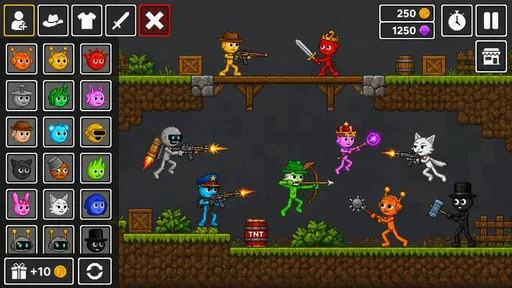
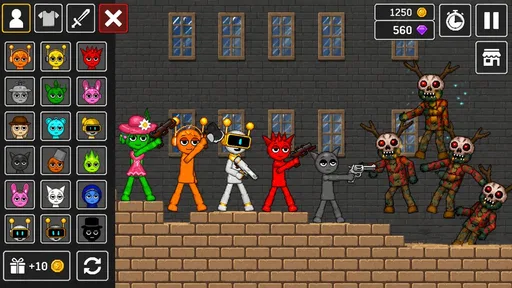
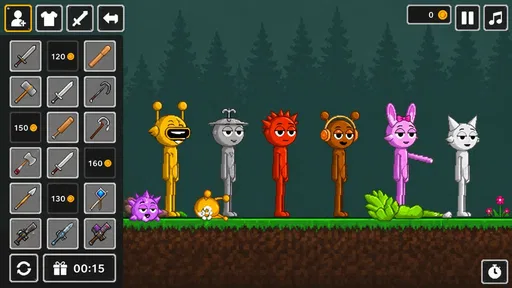
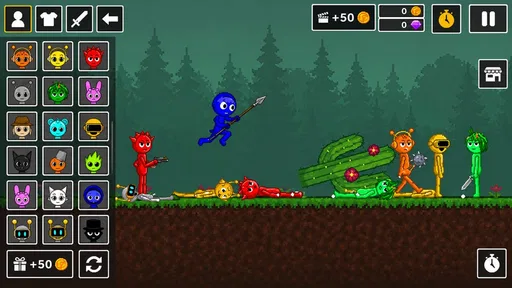
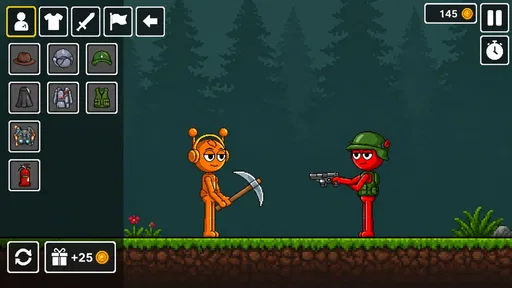
Our Review of Sprunki Ragdoll Playground
 Analysis by Appyee
I spent time with Sprunki Ragdoll Playground as a small, free simulation game built around playful experimentation rather than a fixed campaign. Its appeal is easy to understand: you get a sandbox, ragdoll characters, and the freedom to arrange situations, knock things apart, and see what happens. I found it most enjoyable when I stopped looking for a traditional objective and treated each session as a quick experiment.
That distinction matters before you install it. This is not the kind of game I would choose for a long story, carefully balanced missions, or a competitive progression system. It is better suited to short bursts when I want something interactive and silly. The game is listed for Everyone, so its presentation is aimed at a broad audience, while the physics-based chaos gives it enough room for older players who enjoy testing cause and effect.
How the current sandbox feels in practice
The central experience is simple to grasp. I can build a scene, introduce ragdoll characters, disturb the setup, and then rebuild it in a different way. That loop gives the game its personality. Instead of asking me to complete a checklist, it encourages me to create my own small challenges: make a precarious arrangement, see how long it survives, or deliberately turn a calm scene into a chain reaction.
For a simulation game, the low-pressure structure is one of its strongest qualities. I do not have to learn a complicated control scheme before experimenting. The useful mindset is to treat every object and character placement as part of a test. If something collapses immediately, that is not necessarily failure; it can reveal what to change in the next attempt.
I particularly liked the way this supports quick sessions. If I have a few minutes while waiting for an appointment, I can open the playground, try one idea, and leave without feeling that I have abandoned a mission. The same flexibility also makes it suitable for sharing a device with a younger player, provided an adult is comfortable with the game’s cartoon ragdoll theme.
The developer, Doublentil, has positioned the project as a focused playground rather than a large, content-heavy production. That focus keeps the premise understandable, but it also means the enjoyment depends heavily on whether you like making your own goals. Players who need constant rewards may find the experience thin after the novelty of the physics wears off.
What I actually do during a session
My most useful approach was to begin with a small setup instead of filling the scene immediately. I placed a character, created one unstable arrangement, and watched how the result developed. Then I changed only one element. That made it easier to understand which adjustment caused a different outcome, and it turned random-looking chaos into a basic experiment.
A second approach is to build in stages. I first create a stable starting point, then add a complication, and only afterward trigger the disturbance. This is more satisfying than scattering everything at once because it gives the scene a before-and-after. It also helps when I want to reproduce an amusing result rather than hoping the same accident happens again by chance.
There is a practical trade-off here: the game gives me freedom, but freedom can feel like a lack of direction. I recommend deciding on a tiny objective before each attempt. For example, I might try to keep one character upright while changing the surrounding arrangement, or create the most dramatic collapse using the fewest changes. These personal rules make the sandbox last longer without pretending that it has a formal mission system.
Why the ragdoll focus works
Ragdoll movement gives the playground an immediate visual payoff. A carefully balanced setup can fail in an entertaining way, and an ordinary action can produce a result I did not expect. That unpredictability is the reason I kept returning for another attempt. The fun comes less from winning and more from seeing a situation develop differently than planned.
It also makes the game approachable for people who are not regular simulation players. There is no need to understand a large fictional world or memorize a deep set of rules. The player can learn by trying something, observing the result, and adjusting the next setup. In my experience, that is a better introduction to sandbox play than a complicated construction game with many menus and resources.
Still, physics-driven amusement can be subjective. If you prefer precise controls and predictable outcomes, the same looseness may feel frustrating. A ragdoll sandbox is at its best when the player accepts a little disorder. It is not the right pick for someone seeking exact platforming, tactical planning, or a tightly authored sequence of challenges.
Version, audience, and what the release tells me
The current release is version 1.0, and the game became available on August 18, 2026. I read that as an early snapshot of the project rather than proof of a long-established content cycle. The confirmed release information tells me where the product stands now, but it does not justify assuming future expansions, extra modes, or a particular update schedule.
That makes the present experience especially important. I would install it for the sandbox idea that is already here, not because I expect promised additions. If Doublentil continues developing it, the most valuable improvements would be ones that deepen experimentation without burying the simple controls under menus. New ways to arrange scenes, clearer feedback after an experiment, or tools that help recreate a successful setup could all make the existing concept more rewarding.
For now, the version number also sets expectations around polish and breadth. A first major release can be perfectly enjoyable while still feeling narrower than a mature alternative. I noticed that the game’s value comes from replaying the same basic idea in different ways, so its longevity will depend on how much variety the sandbox already offers on a particular device and how willing the player is to invent challenges.
The game requires Android 7.0 or newer, which gives it a fairly broad technical reach among Android users. It is free to install, and its listing shows over ten thousand installs. Those details make it easy to try without a financial commitment, but I would still judge it by the time it holds my attention rather than by its accessibility alone.
Because the age classification is Everyone, I see it as a reasonable candidate for casual family play, with one important caveat: adults should decide whether the slapstick ragdoll presentation fits the child using the device. The rating helps communicate the intended audience, but it does not replace personal judgment about tone and play style.
What changes for someone already playing
For an existing player, the move to a versioned release is less about learning a new game and more about understanding the current baseline. The core appeal remains the ability to build and disrupt scenes. I would not approach this update as a dramatic reinvention; I would approach it as the point from which the developer can refine the playground.
That is good news if you already enjoy open-ended experiments. You can continue using the same personal workflows: start small, change one variable, and repeat the setup when a result is worth testing. It is less exciting if you were hoping for a large new progression layer, because the confirmed release details do not establish one.
My advice to returning users is to keep notes mentally, or even take a screenshot outside the game when a setup is especially entertaining. A sandbox can produce memorable moments that are difficult to recreate. Treating each scene as a small design rather than a disposable accident gives the current version more staying power.
Where it still feels limited
The biggest limitation is the absence of an obvious long-term structure in the experience I reviewed. A player can create many situations, but the game does not automatically give those situations meaning. That is fine for a toy-like playground, yet it can leave a gap for anyone who expects unlocks, missions, or a sense of completion.
Another limitation is the balance between surprise and control. Unpredictable ragdoll behavior creates funny results, but it can also make a carefully planned test feel inconsistent. When I wanted to reproduce an outcome, I had to be patient and adjust the setup gradually. Players who value repeatable precision may prefer a construction simulator with more explicit tools.
The free price lowers the barrier to entry, but it also makes the first session important. If the basic interaction does not click quickly, there may be little reason for a reluctant player to persist. I would recommend trying it when you are in the mood for experimentation, not when you want a guided game to explain exactly what to do next.
It is also worth being realistic about comparisons. A physics sandbox such as this is more immediate than a traditional life simulator, because I can begin experimenting without managing a large routine. On the other hand, it offers less structured depth than a building game with technology trees, resource systems, or elaborate objectives. Compared with a puzzle game, it gives me more freedom but fewer clearly measured solutions. The better choice depends on whether I want discovery or direction.
Who should try it, and who should skip it
I would recommend this game to someone who enjoys playful physics, quick experiments, and making their own rules. It is a good fit for a child or adult who likes watching a setup go wrong in an amusing way, and for a casual player who wants something free that can be opened without committing to a campaign.
I would also suggest it to creators who enjoy inventing small visual scenarios. The useful challenge is not simply making the biggest mess. It is designing a setup with a clear idea, changing one part, and observing whether the result matches the prediction. That turns a lightweight game into a basic exercise in timing, balance, and cause and effect.
I would skip it if my priority were a story, competitive ranking, detailed character development, or a reliable sense of progression. I would also choose a more structured alternative if I became frustrated by repeating experiments without a clear reward. The game cannot replace a full construction simulator or a mission-based physics title; it offers a different kind of satisfaction.
What I will be watching as it develops
The most meaningful future direction would be anything that preserves the immediate playground while giving players better reasons to return. I would watch for tools that help organize experiments, options that make successful scenes easier to repeat, and additions that increase variety without making the interface intimidating.
I would be cautious about judging the game by expectations that have not been established. The current version is the evidence available today, and my recommendation is based on that playable premise: build a situation, disturb it, learn from the result, and try again. If future development adds depth, that would be welcome, but it should be treated as a possibility rather than part of the present purchase decision.
After using it, my honest view is that Sprunki Ragdoll Playground is best understood as a pocket-sized physics toy. It is free, easy to approach, and enjoyable when I bring my own curiosity to the scene. Its limitations are equally clear: the open-ended format may not hold players who need goals, and the ragdoll unpredictability will not suit everyone.
For the right player, that simplicity is the point. I can open it during a short break, create one ridiculous arrangement, watch it collapse, and close the game satisfied. I would recommend giving it a try if that kind of self-directed amusement sounds appealing, while choosing a more structured simulation if I want a campaign, progression, or carefully controlled challenges.
Verdict
Strengths of Sprunki Ragdoll Playground
- Simple controls make it easy to experiment with ragdoll physics.
- Sandbox gameplay encourages creative and unpredictable setups.
- Quick sessions work well for casual play or short breaks.
- Varied objects and interactions keep experiments from feeling repetitive.
- Runs offline, so no constant internet connection is required.
Limitations of Sprunki Ragdoll Playground
- Physics can occasionally behave inconsistently or produce awkward animations.
- The open-ended gameplay may feel aimless without clear objectives.
- Ads may interrupt play, depending on the version and device.
- Some content or tools may require extra progress or in-app purchases.
- Performance can drop when many characters and objects appear together.
Similar Picks in This Category
View All
Truckers of Europe 3
Wanda Software4.3

Town Building Life Simulator
XGame Global4.2

Fidget Toys Trading・Pop It 3D
Freeplay Inc4.7

Sculpt People
CrazyLabs LTD4.4

Scary Teacher 3D
Z & K Games4.2

Hair Tattoo: Barber Shop Game
CASUAL AZUR GAMES4.3
Frequently Asked Questions
What is Sprunki Ragdoll Playground?
Sprunki Ragdoll Playground is a physics-based sandbox game built around playful character experiments, obstacle setups, and ragdoll interactions. Players can place characters and objects in an open playground, then watch how they react to movement, collisions, traps, and environmental elements. It is designed more for creative experimentation and casual entertainment than for a traditional story-driven campaign.
How do you play Sprunki Ragdoll Playground?
Gameplay is generally based on selecting characters or objects, positioning them around the playground, and interacting with the environment to create different scenarios. You can test collisions, launch characters, arrange obstacles, and repeat experiments to see unpredictable results. The controls are usually easy to understand, making the game accessible for short sessions, although some experimentation may be needed to discover all available tools.
Is Sprunki Ragdoll Playground suitable for children?
The game has a cartoon-style presentation and simple sandbox mechanics, but parents should still review the content before allowing younger children to play. Ragdoll physics can include falls, impacts, and exaggerated character reactions that may not appeal to every family. Because versions and content can vary, checking the official store description, age rating, screenshots, and privacy information is recommended before downloading.
Can Sprunki Ragdoll Playground be played offline?
Many sandbox games of this type can be used without a constant internet connection once installed, especially when the main gameplay focuses on local physics experiments. However, internet access may still be required for the initial download, advertisements, updates, analytics, or optional online features. Offline availability can differ between Android and iOS versions, so it is best to test the game in airplane mode after installation.
Is Sprunki Ragdoll Playground free to download?
Sprunki Ragdoll Playground may be available as a free download, but the exact monetization model depends on the version published in your region. Free editions can include advertisements, optional purchases, locked content, or limits on certain tools and characters. Before installing, review the store listing for in-app purchase details, required permissions, developer information, device compatibility, and recent user reviews.
Play our best games!


